
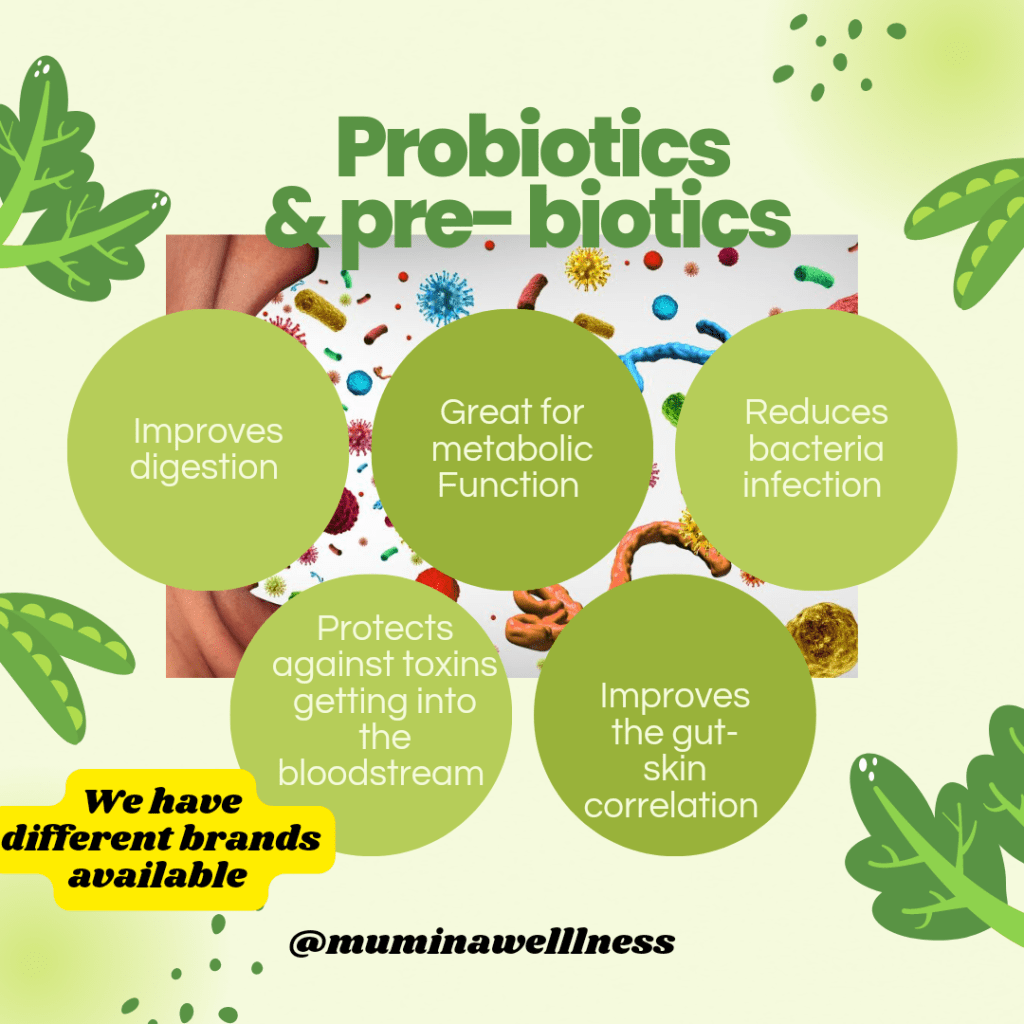
With the growing evidence of the role of the gut microbes in disease prevention & management, the popularity of probiotics is increasing by the day.
This is one of the reasons that we have manufacturers and producers misusing the words ‘ Probiotics ‘ on their labels especially on products or foods targeting skin, the gut, weightloss and more because of the benefits that a good microbiome has on health.
But what exactly are Probiotics?
This are live cultures that take residence in your gastrointestinal tract. From the stomach, small intestines, and primarily on the colon.
There are several species of bacteria in the stomach but we have two major ones, popularly classified as either the good or the bad bacteria. Together they form what we call Gut microbes/ Gut microbiome.
For optimal functionality, a diversity in numbers and types of microbes in the gut is encouraged and having a balance of both has been shown to have positive impact on digestion, metabolic health, obesity control, mental disorders etc.
The problem with gut microbes, poor practices like diets rich in synthetic sugars, processed and refined carbohydrates, alcohol consumption, medication and chronic stress has been shown to disrupt the balance negatively and this is why you might be experiencing recurrent bloating, constipation, infections, or even something as complex as blood sugar control irregularities.
It is very important to try as much as we can to maintain a positive balance of the microbes. So how do we do that?
https://youtu.be/mXWMXtq9T2I please take a minute to check my YouTube channel, I create relatable, timely and scientific Nutrition and Health content and I post a video weekly.
1. Encouraging consumption of VARIETY of foods. With increasing evidence on the dangers of obesity & inflammation on health outcomes, there has emerged ‘ health ambassadors ‘ advocating for crazy restrictions.
Why I’m I calling them crazy? You see when God placed Adam & Eve in the garden of Eden and gave them access to all plants & animals, He knew that they NEEDED the diversity in order for their gut to function optimally.
Restricting intake of various foods & food groups restricts enzyme & acid release that would have otherwise activated the existing microbes to help in digestion of the specific foods. Chronic restrictions means that the diversity will not only be reduced but they’ll become inactive and this is exactly how they act when you get infectious agents in your system. Because they’re inactive they cannot respond.
A recent study demonstrated the importance of diversity in microbes in disease prevention and control as it compared two different populations – the typical American feeding on the same type of food daily compared to a Caribbean population eating different types of foods. And as expected, the Caribbeans incidence of diseases such as Diabetes, cancers, obesity and more is lower compared to the Americans.
In Kenya we pride ourselves with diversity ( the government needs to protect this) so let’s take advantage of that and stop with the crazy restrictions. They’re terrible for you.
2. Reducing Chronic Stress– In the fast paced world where rest is perceived as laziness and been emotional needy or weak, people are more overwhelmed than ever.
Another thing the hard economic times, coupled with the drastic changes in socialism has increased stress related conditions like depression, anxiety due to increased rates of loneliness and ‘aloneness’.
Stress has been linked to occurrence of most Non-communicable diseases like diabetes, cancers, hypertension, Mental disorders and there’s data supporting the disruption of metabolic function, digestion and gut flora due to chronic stress.
The body can protect itself from normal life stressors here and there but when it gets chronic, it becomes a problem. Let’s purpose to reduce stressors if we can.
3. Reduce Alcohol consumption – alcohol is a known steriliser. Unfortunately it wipes both the good and the bad bacterias maintaining a negative balance by reducing variety, types and numbers of gut microbes.
Taking fermented alcohol , things like beer or wine, in moderation may not be harmful but overdoing it is a problem.
4. Overconsumption of processed & refined foods. Modernisation is characterised by alot of food processing. Processing has both positive and negative impacts on the population.
Some of the positive benefits is reduced wastage, easier access and preparation methods – less time consuming and distribution advantages.
The disadvantages on the other hand come with alot of negative impacts on health & nutrition status of the population. During processing, key nutrients like fibres, water, and even trace elements like minerals & vitamins are removed especially if the goal is shelf life. What it means is that there will be an increased access to calorie dense foods that are limited in all the other nutrients and this is where conditions like obesity, type 2 diabetes, cancers etc, sprout.
Reduced intake of fibres, both solube & insoluble has negative impact on the gut microbiome because;
✅one of the reduced activity and two because they’ll lack food that is provided from fermentation of the fibres in the colon..
Let’s purpose to consume a wide variety of whole foods, fruits & vegetables as well as lean proteins and Healthy fats.
5. Physical exercise – exercise has alot of health benefits and one of it is Improved digestion which provides a good environment for gut microbes. Secondly, exercise is great for stress reduction and it has been shown to improve sleep patterns in people suffering from insomnia.
Sleep is important in maintaining a good gut culture because of release of enzymes, antioxidant and even for the gut brain axis which is important in regulation of activities in our body.
Purpose to get atleast 7-9 hours of sleep daily for optimal health.
6. Synthetic sugars like candies, ice-cream, sodas, cakes, sweetened milks, bread and more have been shown to have a negative impact on gut functionality. Reduce intake.
7. Fermented foods – Growing up, making or even taking fermented porridge was very common. Even fermented fruits and vegetables was something we’d have access to.
My grandparents used to ferment milk for mala and it was like that until recently. From 2010 there about. We blame the busy schedules and timelines that we have subjected ourselves to in the name of maximising time and such.
I am in agreement that fermenting things from scratch is both tiresome and time consuming so we should purpose to take fermented foods that are available in the supermarkets shelves and let them be sugar free as well.
I hope you this article was helpful, if it was kindly subscribe, like and show my YouTube channel
https://youtu.be/mXWMXtq9T2I
Thank you.
Signed with love
Lilian Mumina
Registered Dietitian
Mumina Wellness Solutions
https://youtu.be/mXWMXtq9T2I

 Nutrition, Diet and Health Tips
Leave a comment