Malnutrition remains one of Kenya’s most persistent public health challenges, affecting millions. Malnutrition has been associated with reduced quality of life (Stunting and other effects), reduced productivity (Altered growth & development), increased burden of diseases (Undernutrition, Overnutrition/Hidden hunger).
Despite ongoing interventions, our battle against malnutrition has been hampered by siloed efforts, fragmented strategies, and inadequate coordination among key stakeholders. But there’s hope on the horizon with the adoption of the One Health approach.
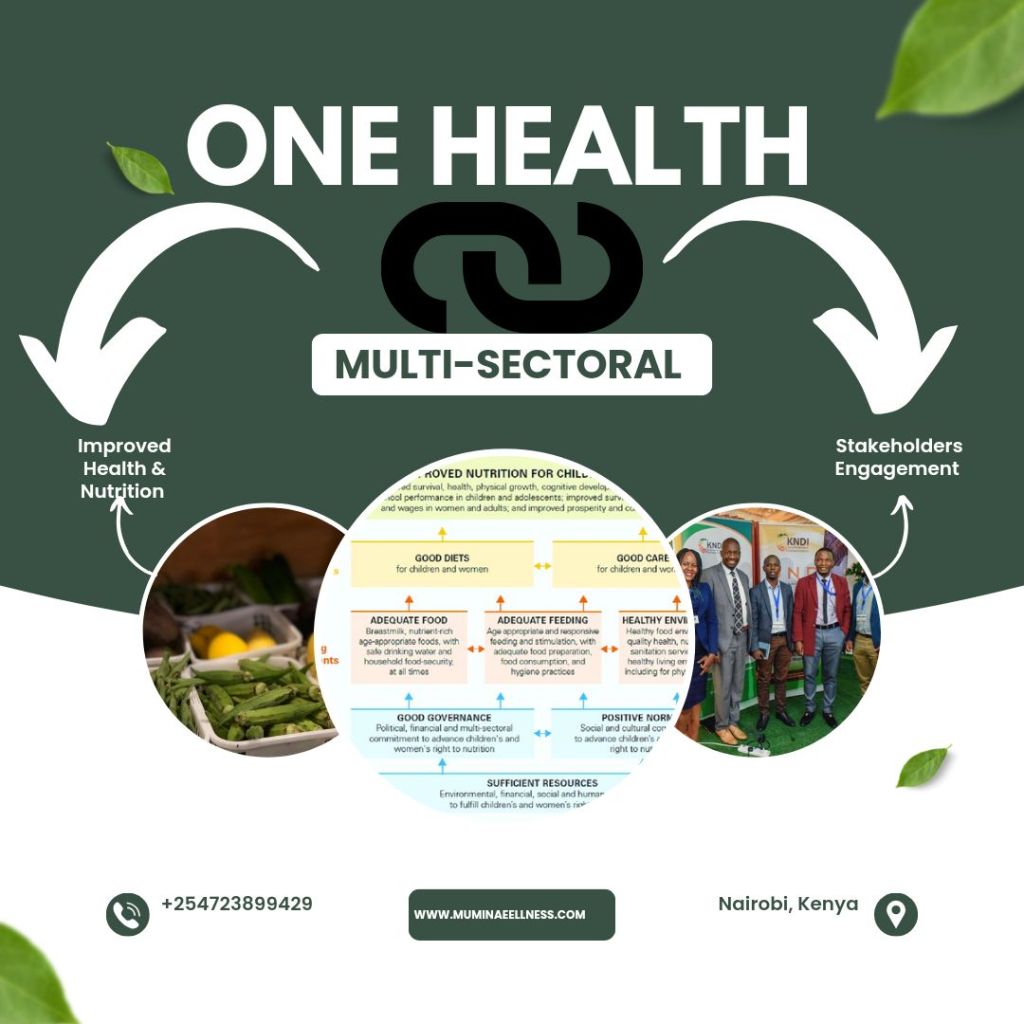
One Health is more than just a buzzword; it’s a holistic framework that recognizes the interconnectedness of human, animal, and environmental health. By embracing One Health, we shift from isolated interventions to integrated, multisectoral strategies that address the root causes of malnutrition. The recent resolutions from the 4th International Nutrition Conference, hosted by the Kenya Nutritionists and Dieticians Institute, marked a significant milestone in this journey. It’s a call to the Ministry of Health to Effectively adopt ‘One Health‘ as an effective strategy for Combating Malnutrition in Kenya.
This will necessitate the Integration of Nutrition as a cross cutting issue in Programs/Projects focusing on One Health as well as Multi-sectoral approach design into our Existing Health Systems.
How can we integrate Nutrition to both One Health & Multi-sectoral approach?
1. Integrated Training and Capacity building for Healthcare workers & Community Health Promoters.
These programs should cover:
Nutrition Education & Training: Equip Health workers with knowledge on the importance of nutrition in preventing and managing both human and animal diseases, particularly zoonotic diseases ( Introducing Modules that focus on One Health & Multi-sectoral approach into our curriculums).
Zoonotic Disease Awareness: Utilise Animal and plant Health Specialists like Veterinarians, Epidemiologists, Agricultural Extension officers, Animal Nutrition specialists & Human Nutrition specialists to educate communities on the links between nutrition, zoonotic diseases, and overall health. For example, they can highlight how malnutrition in livestock can increase susceptibility to zoonotic diseases, impacting human health.
Agriculture and Food Security: Train and Educate the community on best agricultural practices that enhance food security and nutrition. We can promote the cultivation of nutrient-rich crops and the importance of dietary diversity.
2. Integrated Community-Based Surveillance and Education:
Develop a community-based surveillance system that tracks nutrition, zoonotic diseases, and top under-five diseases simultaneously.
This can be done by:
Routine Monitoring of Nutritional Status: Regularly assess the nutritional status of children under five, pregnant women, and other vulnerable groups.
Early Detection of Zoonotic Outbreaks: We are currently experiencing MPox outbreaks. Public health specialists and Healthcare workers should be trained to detect early signs of zoonotic diseases in both animals and humans.
Behavior Change Communication: Use targeted behavior change strategies to educate communities on safe agricultural practices, proper nutrition, and disease prevention.
3. Multisectoral Coordination Platforms:
Establish multisectoral coordination platforms that bring together health, agriculture, and veterinary sectors.
These platforms should:
Facilitate Cross-Sector Dialogue: Regularly convene meetings to discuss integration strategies, share data, and coordinate responses to health and nutrition challenges.
Develop Integrated Policies: Create policies that address nutrition in the context of zoonotic disease control and agricultural practices, ensuring that these are embedded in the health system strengthening initiatives. The ministry of Health should spearhead the formulation and establishment of ‘ One Health Policy that adopts Multi-sectoral Approach as recommended by the Kenya institute of Nutritionists and Dieticians (KNDI).
4. Nutrition-Sensitive Agricultural Practices:
Promote and support nutrition-sensitive agricultural practices that contribute to the prevention of both zoonotic diseases and malnutrition.
This includes:
Diversified Farming Systems: Encourage the integration of livestock with crop production to improve both food and nutrition security while reducing the risk of zoonotic diseases.
Biofortification: Promote the cultivation of biofortified crops that are high in essential nutrients to combat malnutrition.
Livestock Management: Implement practices that improve livestock health and productivity, which in turn, supports better nutrition for communities that rely on animal products.
5. Strengthening Health Systems through Integrated Data Collection:
Integrate nutrition, zoonotic disease, and health data into existing health information systems. This can be done by:
Unified Data Collection Tools: Develop and distribute tools that allow Public Health Specialists ( Nutritionists, Epidemiologists, Researchers )to collect and report data on nutrition, zoonotic diseases, and under-five diseases in a single system.
Real-Time Data Sharing: Utilize digital platforms for real-time data sharing among different sectors to ensure timely responses and resource allocation.
Feedback Loops: Create feedback mechanisms where health care specialists can receive updates and guidance based on the data collected, ensuring continuous improvement of the program.
6. Community Engagement and Empowerment:
Leverage CHPs to engage communities in identifying their own nutritional and health priorities through participatory approaches. This includes:
Community-Led Initiatives: Empower communities to develop and implement their own action plans to improve nutrition and health, supported by CHPs.
Targeted Education Campaigns: Use Professionals to lead campaigns on the importance of nutrition in disease prevention, particularly in relation to zoonotic diseases and under-five health.
7. Resource Mobilization and Sustainability:
Develop innovative financing mechanisms that support the integration of nutrition into zoonotic disease and health programs. This could include:
Public-Private Partnerships: Engage private sector partners to invest in integrated health and nutrition initiatives.
Community-Based Financing: Establish community-based savings groups that can fund local health and nutrition activities
Government Support: Advocate for government policies that allocate resources to integrated health, nutrition, and agriculture programs.
By implementing this multifaceted approach, nutrition can be effectively integrated into programs focusing on animal health, zoonotic diseases, and agriculture, all while leveraging the crucial role of Health Professionals and Community Health Promoters in strengthening the health system in Kenya.

 Nutrition, Diet and Health Tips
Leave a comment