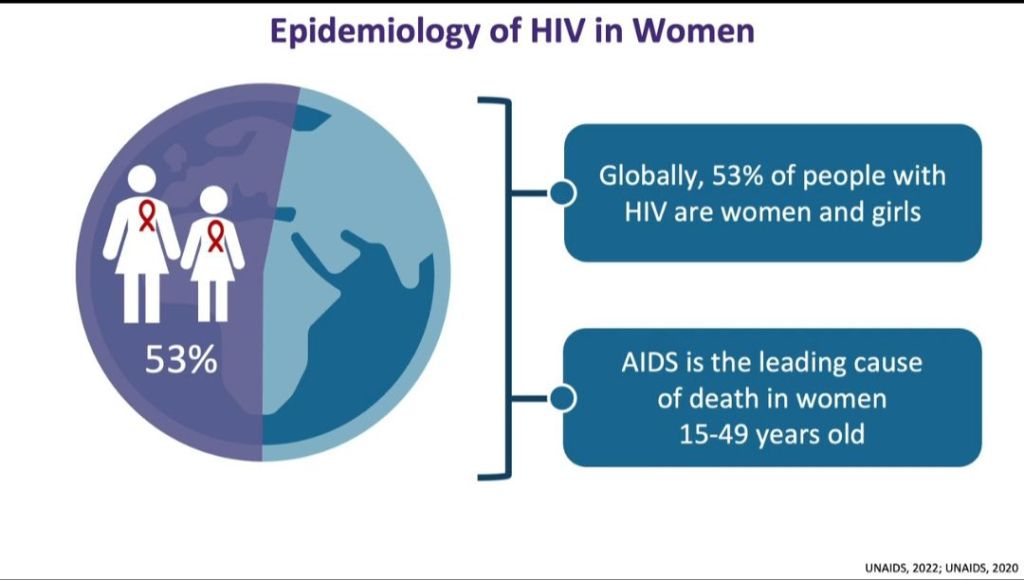
Did you know that 53% of people living with HIV globally are women and girls? And for women aged 15 to 49, AIDS remains the leading cause of death. Those aren’t just statistics—they’re wake-up calls. So, why are women disproportionately affected by HIV?
Let’s break it down.
1. Biological Vulnerability
Women—especially adolescent girls—are biologically more susceptible to HIV during heterosexual intercourse. The vaginal mucosa is more exposed, and younger girls are still maturing biologically, making their mucosal lining thinner and easier for the virus to penetrate.
According to WHO (2023), women are twice as likely to contract HIV from men during unprotected sex than vice versa.
2. Structural & Socioeconomic Inequities
Think poverty, limited access to education, gender inequality, and lack of access to healthcare. These issues make women more vulnerable—not only to HIV but also to silence. Many can’t negotiate safe sex, access antiretroviral therapy (ART), or even attend clinics without stigma.
UNAIDS 2023 Global Report highlights that in sub-Saharan Africa, young women (15-24) are three times more likely to acquire HIV than their male counterparts.
3. Gender-Based Violence
Let’s talk about the silent epidemic—intimate partner violence (IPV) and sexual assault. These experiences don’t just scar—they expose women to HIV directly and limit their ability to seek care.
A 2022 study by The Lancet HIV found that women who have experienced IPV are 1.5 times more likely to acquire HIV.
4. Cultural and Relational Factors
In many cultures, early marriage, polygamy, and power imbalances in relationships limit a woman’s agency over her body and sexual health. Add myths and misinformation about contraception and HIV, and we have a deadly mix.
5. Lack of Comprehensive Sexual Education
Without the right information, young women are forced to rely on peers, social media, or myths. That puts them at higher risk.
So, What Can Be Done?
Let’s flip the narrative. Women deserve protection, dignity, and power in the fight against HIV. Here’s how we can make that happen:
1. Scale Up Comprehensive Sex Education
Empower girls with knowledge about HIV, consent, and contraception in schools and communities. Studies show that well-informed girls are less likely to engage in risky behaviors.
2. Promote and Provide Pre-Exposure Prophylaxis (PrEP)
PrEP is a game-changer for women at high risk. When taken daily, it can reduce the risk of acquiring HIV by up to 99%.
WHO 2022 guidelines recommend offering long-acting injectable PrEP (like cabotegravir) for women who struggle with adherence to daily pills.
3. Address Gender-Based Violence
Strengthen laws, provide safe shelters, train healthcare workers, and offer psychological and medical support to survivors. Ending GBV is HIV prevention.
4. Ensure Gender-Inclusive HIV Services
Design women-friendly clinics, provide ART without stigma, and ensure sexual and reproductive health services are integrated with HIV care.
5. Invest in Economic Empowerment Programs
Programs that boost financial independence for women help them escape risky relationships and reduce reliance on transactional sex.
Let’s Hear From You:
- Have you or someone you know faced challenges in accessing HIV prevention or treatment?
- What can your community do better to protect women from HIV?
Let’s break the silence, share knowledge, and empower women. HIV prevention isn’t just about medication—it’s about equity, education, and action.
Together, we can rewrite the story.

 Nutrition, Diet and Health Tips
Leave a comment