Reframing the Narrative: A Call for Unity, Strategy & Holistic Investment in Primary Healthcare
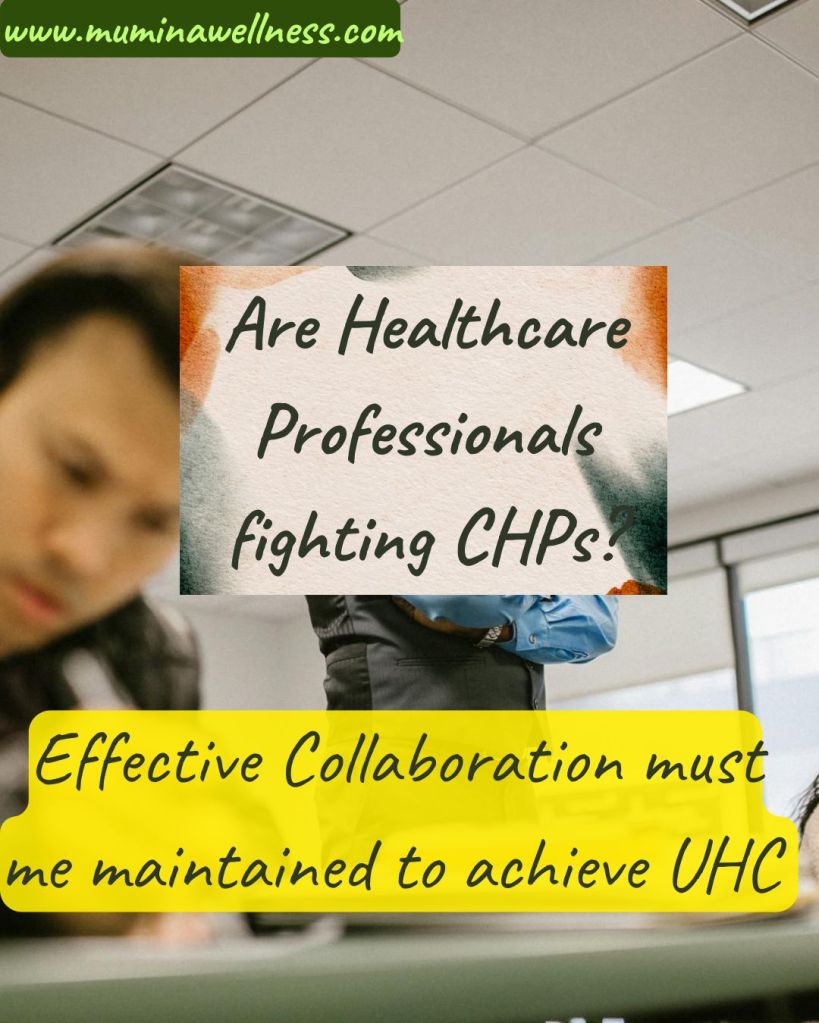
Contrary to what many believe, no healthcare professional is against the deployment of Community Health Promoters (CHPs).
In fact, we support the initiative.
We understand — better than anyone — the critical role CHPs play in achieving Universal Health Coverage (UHC), especially when there’s a clearly established referral system.
CHPs are valuable. They reach where we often cannot. They help with tracing, follow-ups, community sensitization, and linkages to care.
But let’s be honest — the government has deliberately pushed a divisive narrative that health professionals are resisting CHPs.
Why?
To divert attention from the real issues:
- Massive unemployment of trained healthcare workers (the irony… we’re short-staffed but still not employing)
- Poor infrastructure and underfunded Level 1, 2 & 3 facilities
- Lack of proper staff mix at primary care level — no nutritionists, psychologists, lab techs, or rehab specialists
- Weak referral systems
- Political interference, misplaced priorities, and reactive policies
Let’s be clear: The problem is not CHPs. The problem is using CHPs as a replacement for a strong, skilled, and multidisciplinary primary healthcare workforce.
UHC Is a Team Sport – Not a One-Person Game
Achieving UHC means delivering promotive, preventive, and early diagnosis services. This requires a diverse health workforce:
- CHPs offer community-level engagement: health talks, follow-ups, and referrals.
- Nutritionists prevent and manage malnutrition and diet-related diseases.
- Mental health professionals address stress, addiction, trauma, and rising suicide cases.
- Lab techs provide critical diagnostic services.
- Nurses, clinical officers, and medical doctors offer care, treatment, and follow-up.
Each of these professionals plays a unique and non-substitutable role.
You can’t tell a CHP to diagnose cervical cancer or manage severe anemia.
You can’t ask a nutritionist to do house-to-house tracing.
You need both — working together, not one replacing the other.
Why the False Choice is Failing Us
By focusing only on CHPs while sidelining other professionals, the government is:
- Weakening quality of care
- Stalling efforts toward real preventive healthcare
- Increasing burnout among the few professionals at facilities
- Ignoring the need for community empowerment through education
- Creating a perception that CHPs can solve everything, which sets them up for failure
And sadly, this shift is happening while thousands of qualified nutritionists, lab techs, and other health professionals remain unemployed.
Global Lessons We Must Learn From
- Rwanda: Their CHW model works because it’s fully embedded within a system that has doctors, nurses, nutritionists, and a strong referral chain.
- Thailand: Their UHC success stems from a balance between CHWs and skilled professionals, with massive investment in primary healthcare facilities and public health education.
- Brazil: Their Family Health Strategy integrates CHWs with a team that includes doctors and nutritionists. Result? Lower infant mortality, fewer hospital admissions, and improved chronic disease outcomes.
The pattern is clear: no country has achieved UHC by replacing professionals with community health workers. They achieved it by integrating them.
A Better Way Forward for Kenya
- End the divisive narrative — CHPs and professionals are not rivals.
- Fund Level 1–3 facilities adequately, with proper infrastructure and referral systems.
- Employ the full spectrum of professionals — nutritionists, lab techs, psychologists, physiotherapists, etc.
- Use CHPs as a complement, not a substitute.
- Build a truly preventive model — one that educates, empowers, diagnoses early, and treats holistically.
- Let health policy be guided by strategy and science, not politics.
Final Word: Invest in Systems, Not Substitutes
As we concluded the Health Summit under the theme “Towards a Healthier Population to Accelerate the Achievement of Universal Health Coverage” — we must ask:
What defines a healthy population?
Is it screening for diabetes alone?
Or is it communities that are educated on safe sex, stress management, food safety, hygiene, mental health, and nutrition?
True UHC will not be achieved through shortcuts or silos.
It will be achieved when we stop choosing between CHPs and trained professionals — and start building a coordinated system that values and invests in both.
Because health is not a competition — it’s a collaboration.
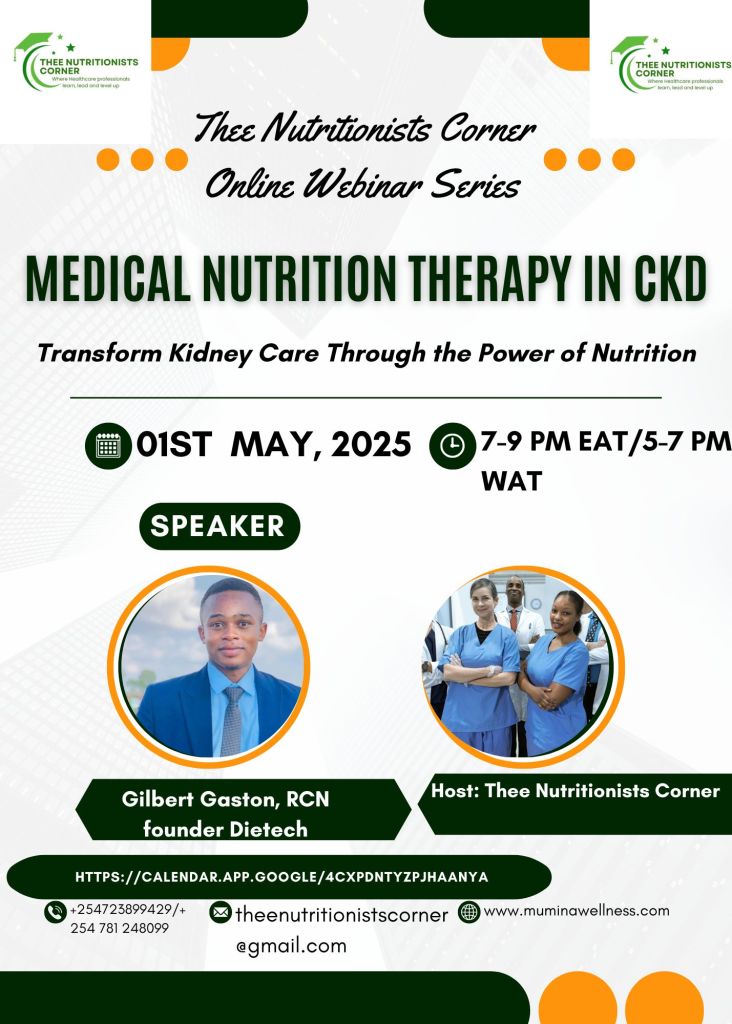
And that’s why we are inviting you to our weekly Webinars on Health & Nutrition from 7p.m EAT.

 Nutrition, Diet and Health Tips
Leave a comment