Kenya is at a critical crossroads.
Once largely defined by hunger and micronutrient deficiencies, our nation now faces a Triple Burden of Malnutrition—undernutrition, micronutrient deficiencies, and a sharp rise in overweight, obesity, and non-communicable diseases (NCDs). According to the Kenya Demographic and Health Survey (KDHS 2022):
- 26% of children under five are stunted—one in four.
- Over 2.8 million adults are obese.
- And NCDs now account for over 30% of all hospital admissions in Kenya, according to the WHO NCD Country Profile 2023.
Let that sink in.
From Feeding the Nation to Failing It?
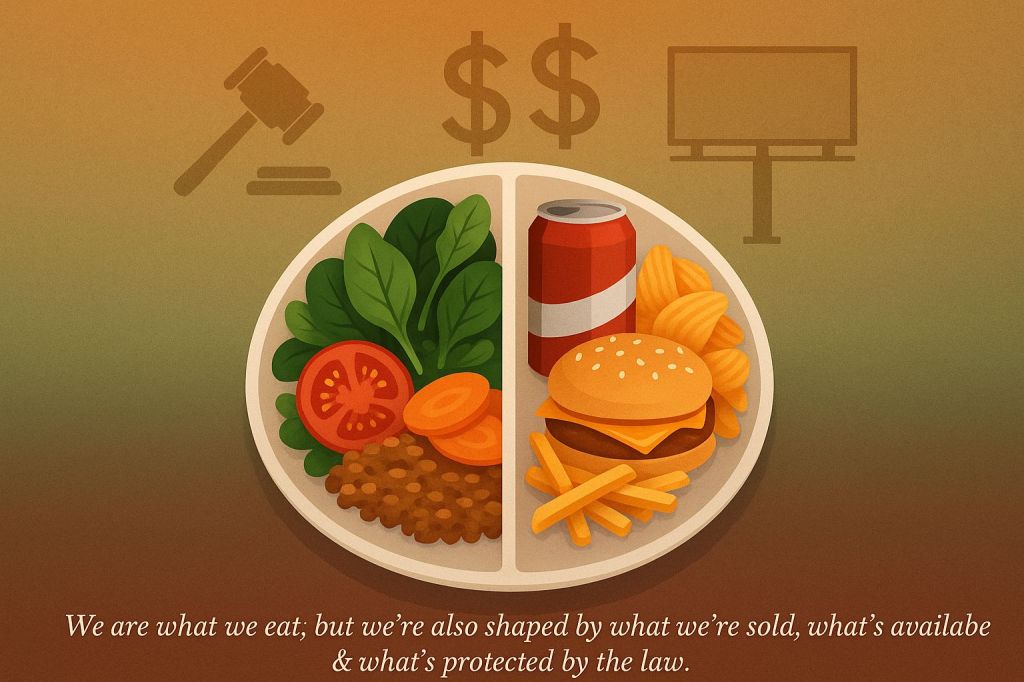
Five or ten years ago, Kenya’s focus on hunger and undernutrition was understandable. We were tackling acute food insecurity—and rightfully so. But in trying to solve hunger, we opened the floodgates to hyper-liberal food markets, trade agreements that prioritized shelf life over nutritional value, and an influx of ultra-processed foods that have now outpaced healthy, traditional alternatives.
We mistook “any food is better than no food” as a long-term solution. But here’s the truth:
Hunger can kill you in 10 days. Bad food can kill you in 5 years.
And while the latter feels less urgent, the cost of disease—hospital bills, lost productivity, lifelong medication, emotional trauma, and grief—is a heavy price to pay.
A Food System That’s Sickening Us
In urban areas, access to fresh, nutritious, affordable food is shrinking. Children as young as five years old are already addicted to sugary drinks, fried snacks, and artificially colored products—pushed aggressively through marketing disguised as cartoons, influencers, and bright packaging.
Food corporations know exactly what they’re doing.
They exploit neuromarketing, using color, placement, reward psychology, and emotional cues to create food addictions. And guess who’s most vulnerable?
✔️ Children, who have no cognitive ability to understand manipulation.
✔️ Low-income families, who are more likely to access cheap, energy-dense, nutrient-poor foods.
✔️ Uninformed caregivers, who trust labels without understanding them.
We’re Normalizing Disease

We now see an alarming rise in:
- Childhood obesity
- Type 2 diabetes in teens
- Eczema, food allergies, and intolerances
- Tooth decay in toddlers
- Mental health issues like ADHD
- Early-onset hypertension and stroke
These aren’t isolated incidents—they’re symptoms of a broken system. One where policies like the Breast Milk Substitutes (BMS) Act exist on paper but remain poorly implemented, undermining infant feeding and lifelong nutrition.
So What Now?
The rise of nutrition-related NCDs isn’t just about personal choices—it’s about systems failure. It’s about trade deals that flood our markets with low-cost, high-risk foods. It’s about sedentary lifestyles, pollution, chronic stress, poor sleep, and substance abuse creating the perfect storm.
And it’s about us—the Nutrition and Dietetics professionals—choosing to speak up or stay silent.
Because the truth is, food is becoming the new pharma. And if we don’t regulate, educate, and advocate, we’ll be spending more on insulin, chemotherapy, dialysis, and antidepressants than we ever spent on millet, sukuma, and beans.
What Can We Do?
✅ Use our voice.
✅ Show up in policy conversations.
✅ Advocate for implementation of existing food laws.
✅ Educate parents, schools, and community leaders.
✅ Call out misleading food ads targeting kids.
✅ Campaign for clear food labeling, marketing restrictions, and health-based trade policies.
And most importantly: Work together. Across disciplines. Across sectors. Across professions.
Join the Conversation:
This Thursday, June 5th, from 7:00–9:00 PM EAT, join us at Thee Nutritionists Corner for a powerful, no-fluff conversation:
🎙️ Webinar: “Shaping Food Environments: Advocacy as a Tool to Tackle Malnutrition and NCDs in Kenya”
With Amos Kamau, Nutrition Advocate & Food Justice Strategist (IFJAD)
🔗 RSVP here: https://calendar.app.google/ahLdpnDgNVw39JMM6
Let’s talk food systems.
Let’s talk advocacy.
Let’s talk about what we—the professionals, parents, educators, and policymakers—must do now to protect future generations.
Because nutrition is not just a profession. It’s a revolution.

 Nutrition, Diet and Health Tips
Leave a comment