Introduction
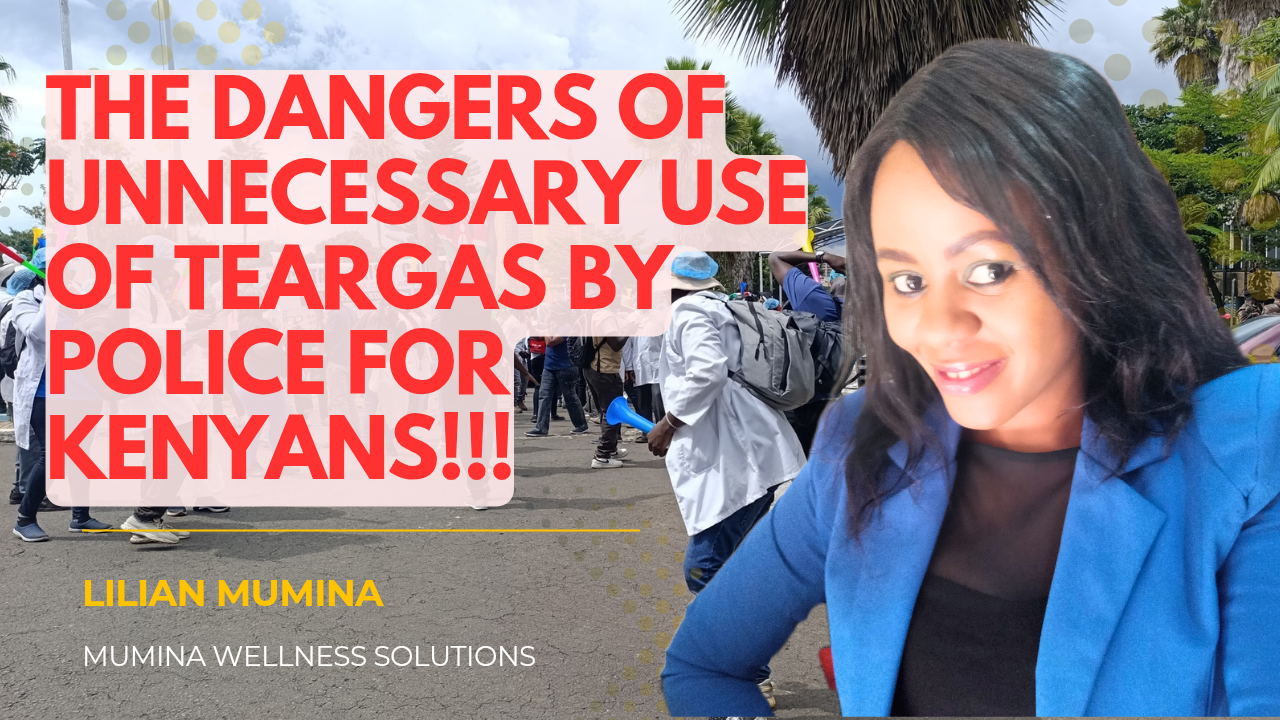
In recent years, Kenya has witnessed increasing use of teargas by police during protests—often unnecessarily and in densely populated areas. While the immediate effects—coughing, eye irritation, panic—are visible and short-term, the long-term health impacts are often ignored, especially in the context of chronic respiratory diseases (CRDs), one of the leading non-communicable diseases (NCDs) globally. According to the World Health Organization (WHO), CRDs such as asthma, chronic obstructive pulmonary disease (COPD), and other lung conditions are progressive and triggered by environmental exposures—including pollutants like those released by teargas.
Understanding Teargas: What Is It?
Teargas is a chemical weapon, primarily composed of compounds like CS (chlorobenzylidene malononitrile) or CN (chloroacetophenone), that cause severe irritation to the eyes, skin, and respiratory tract. Although banned in warfare under the Chemical Weapons Convention (CWC), its use in civilian law enforcement is permitted under certain conditions—often abused in countries with unchecked force, such as Kenya.
How Teargas Affects the Respiratory System
- Immediate Effects: Coughing, wheezing, shortness of breath, burning throat.
- Long-Term Effects:
- Repeated exposure can lead to airway hyperresponsiveness, similar to what is seen in asthma or chronic bronchitis.
- It damages mucosal linings and reduces lung function over time.
- Vulnerable populations—children, the elderly, pregnant women, and people with pre-existing conditions—are at the greatest risk.
Environmental Residue and Community Exposure
Teargas doesn’t vanish instantly. Its residue lingers on:
- Soil and surfaces (especially in urban spaces with limited rain or cleaning).
- Water sources and air particles, depending on wind direction and urban density.
- Indoor spaces, such as homes and clinics where people may take refuge during unrest.
This means residents who were not part of protests—children playing outside days later, market vendors, matatu operators, hospital patients—can still inhale or contact chemical traces.
📌 Case Example: Nairobi CBD, Saba Saba 2025, Gen-Z Protests?
Multiple videos and personal testimonies documented tear gas canisters lobbed into enclosed spaces, including clinics and homes. In some cases, pregnant women and babies suffered from breathing difficulties days later—raising concerns about fetal exposure and childhood lung development.
The danger doesn’t end with the protest. It can extend for days or even weeks, especially without rainfall or proper cleanup.
Link Between Teargas and Chronic Respiratory Diseases
According to WHO’s Global NCD Progress Monitor (2022):
- CRDs are a top cause of preventable morbidity and mortality.
- WHO emphasizes the need to control environmental exposures to reduce NCD burden.
Scientific Evidence of Long-Term Harm
Several peer-reviewed studies and global medical reviews have established that:
- Repeated tear gas exposure can aggravate pre-existing asthma and lead to new cases of reactive airway disease.
- In Chile and Bahrain, medical reports documented increased miscarriage rates and permanent lung damage among protestors and bystanders.
- A U.S. study published in Annals of the American Thoracic Society (2021) found that even short-term exposure to chemical irritants like CS gas can reduce lung function up to 30% in healthy individuals.
WHO and Global Positioning on Respiratory Exposure
According to the World Health Organization, chronic respiratory diseases are:
“A major public health concern driven by pollution, chemical exposure, and poor air quality.”
They emphasize:
- The urgent need to reduce environmental exposures to chemicals like those used in teargas.
- That preventable NCDs now account for 74% of global deaths, with CRDs forming a significant portion, particularly in LMICs like Kenya.
🗂️ Source: WHO. Noncommunicable Diseases Factsheet, 2022.
🔗 WHO on Instagram – Chronic Respiratory Awareness
Ethical, Legal, and Policy Implications
- Right to Health: Article 43 of the Constitution of Kenya guarantees the highest attainable standard of health—including protection from harmful environmental exposures.
- Occupational and Public Safety: The Occupational Safety and Health Act (OSHA) prohibits exposure to chemical substances without protective measures.
- Use of Force Guidelines: Teargas use must be proportional, necessary, and targeted, not indiscriminate or in enclosed, populated areas.
Documented Evidence from Kenya
- Saba Saba & Gen-Z 2025 and 2024 Finance Bill protests: Teargas lobbed inside clinics, homes, and buses—forcing babies, pregnant mothers, and the ill to inhale chemicals with no medical assistance or public health response.
- Nairobi, Machakos, Kiambu, Kajiado and Kisumu residents report persistent coughing, wheezing, and skin irritation days after exposure.
- Health care Professionals warn of increased clinic visits for respiratory symptoms in post-protest weeks.
Call to Action
- 🧪 Commission national studies on the long-term health effects of chemical exposure in protest zones.
- 🛑 Enforce legal limits on the use of teargas, especially in populated residential or hospital areas.
- 🩺 Train healthcare workers to identify and manage chemical-related respiratory injuries.
- 📢 Public awareness campaigns on the dangers of repeated teargas exposure.
- 🧹 Environmental decontamination plans after any use of chemical agents.
Conclusion
Teargas may disperse crowds—but it also disperses danger. Danger that clings to the air, the walls of clinics, the hands of children, and the lungs of our people. In a country already battling a rising tide of NCDs and strained healthcare systems, adding avoidable chronic respiratory illnesses to the mix is a silent tragedy. It’s time we recognized unregulated chemical crowd control as a public health crisis—and acted accordingly.
Key References
- World Health Organization (2022). Noncommunicable Diseases Fact Sheet. https://www.who.int/news-room/fact-sheets/detail/noncommunicable-diseases
- WHO Instagram. (2024). Awareness Reel on NCDs and Chronic Respiratory Conditions. https://www.instagram.com/reel/DLmazXisBce/?igsh=c3N4cnloeHQxZHA2
- Hu, H. et al. (2021). Teargas: Harms, Ethics, and Public Health. Journal of Toxicology and Environmental Health, 84(4), 230-238.
- Kenya Constitution (2010), Article 43.
- Occupational Safety and Health Act, Kenya (2007).

 Nutrition, Diet and Health Tips
Leave a comment