💗 As we wrap up Breast Cancer Awareness Month, let’s talk about one of the most natural, powerful, and often overlooked ways women can protect their breast health — breastfeeding.
While genetics, hormonal imbalance, and inflammation are well-established risk factors for breast cancer, emerging research continues to highlight breastfeeding as a powerful form of protection, especially for women of reproductive age.
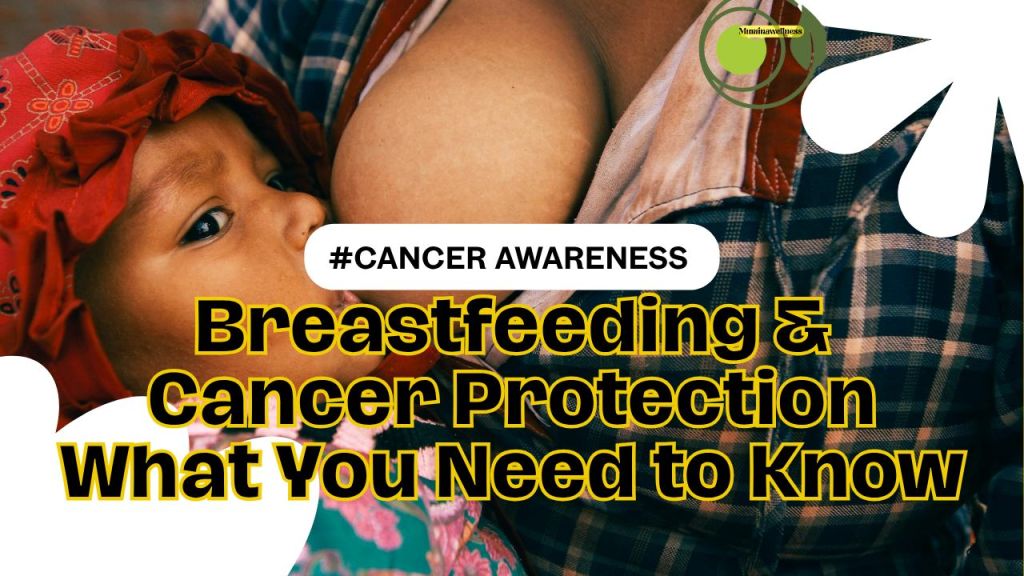
🌸 1. The Science Behind Breastfeeding and Breast Cancer Prevention
Breastfeeding isn’t just about nourishing a child — it also transforms a woman’s body in ways that reduce the risk of breast cancer.
During lactation, the breast tissue undergoes changes that help differentiate and mature breast cells. This cellular maturity reduces their vulnerability to DNA damage that can lead to cancer.
Additionally, breastfeeding lowers lifetime exposure to estrogen, a hormone known to fuel the growth of hormone-dependent cancers.
🔹 Here’s how:
- Ovulation is suppressed during exclusive breastfeeding, meaning fewer menstrual cycles and lower estrogen exposure.
- This reduced hormonal cycling protects breast tissue from repeated estrogen stimulation — a key driver in certain breast cancers.
📖 Reference: Collaborative Group on Hormonal Factors in Breast Cancer. Lancet, 2002; 360(9328):187–195.
🔬 2. Inflammation, Hormones & Immunity — The Triple Link
Breast cancer is an inflammatory and hormonal condition, and breastfeeding supports both systems.
✅ Breastfeeding lowers insulin and growth factor levels, reducing cellular inflammation.
✅ It boosts the immune system through oxytocin release — the “calm and bond” hormone — which also has anti-inflammatory effects.
✅ Regular milk production and release help clear potential carcinogens and reduce breast ductal cell turnover, minimizing abnormal cell buildup.
📖 Reference: Victora CG et al., Lancet Global Health, 2016; 4(5):e395–e405.
🍎 3. Nutrition During Lactation: A Hidden Weapon
Breastfeeding mothers often adopt nutrient-dense diets rich in iron, zinc, healthy fats, and antioxidants — all vital in reducing oxidative stress and inflammation.
Omega-3 fatty acids, for instance, found in foods like sardines, flaxseed, and avocado, lower inflammatory markers and support hormonal balance.
A diet that emphasizes whole, unprocessed foods, adequate hydration, and key micronutrients (like selenium, vitamin D, and folate) enhances the protective benefits of lactation.
📖 Reference: World Health Organization (WHO) & UNICEF. Infant and Young Child Feeding Guidelines, 2021.
👩🏽🍼 4. The Longer You Breastfeed, the Greater the Protection
Studies show that the duration of breastfeeding directly correlates with reduced breast cancer risk.
Women who breastfeed for a cumulative period of 12 months or more (across one or multiple pregnancies) have significantly lower risk compared to those who never breastfed.
In fact, research suggests that every 12 months of breastfeeding reduces breast cancer risk by about 4–5%.
📖 Reference: Collaborative Group on Hormonal Factors in Breast Cancer. Lancet, 2002.
🌿 5. Beyond Biology — Empowering Women Through Awareness
Despite the overwhelming evidence, many women are unable to breastfeed for long due to social pressures, lack of workplace support, or misinformation.
Supporting breastfeeding through:
- Family and workplace flexibility,
- Skilled lactation counseling, and
- Government-backed maternity protections
…is not just a maternal health issue — it’s a cancer prevention strategy.
When we normalize breastfeeding, we empower women to protect both their babies and their long-term health.
💬 Final Takeaway
Breastfeeding isn’t just an act of nurturing — it’s a natural form of protection.
By lowering estrogen exposure, reducing inflammation, and supporting immune health, it helps shield women from one of the most common cancers worldwide.
As we close Breast Cancer Awareness Month, let’s go beyond awareness — and embrace prevention through informed, evidence-based choices.
Every drop of breast milk is not only nourishment for your child — it’s also an investment in your own health. 💗
References
- Collaborative Group on Hormonal Factors in Breast Cancer. Breast cancer and breastfeeding: collaborative reanalysis of individual data from 47 epidemiological studies. Lancet, 2002; 360(9328):187–195.
- Victora CG et al. Breastfeeding in the 21st century: epidemiology, mechanisms, and lifelong effect. Lancet Global Health, 2016; 4(5):e395–e405.
- World Health Organization (WHO) & UNICEF. Infant and Young Child Feeding Guidelines, 2021.
- Collaborative Group on Hormonal Factors in Breast Cancer. Lancet Oncology, 2021; 22(8):1131–1143.

 Nutrition, Diet and Health Tips
Leave a comment