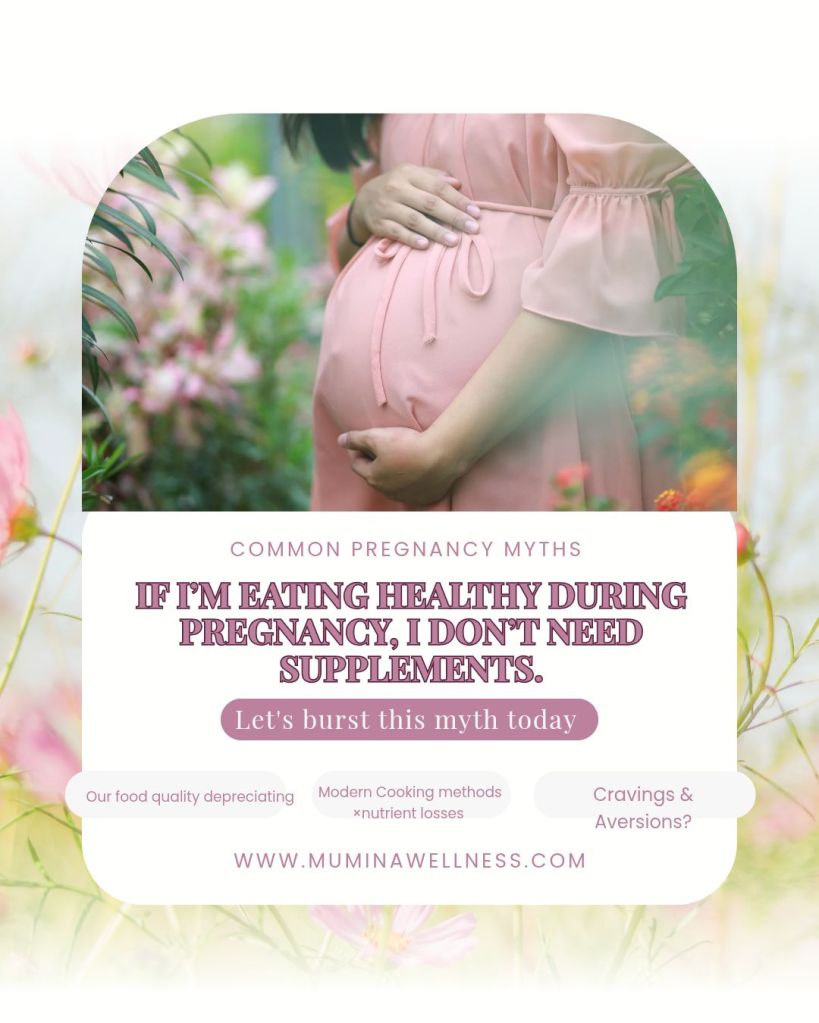
Many expectant mums believe that as long as they’re eating balanced, natural foods, supplements are unnecessary. It sounds logical — after all, food is our natural source of nutrients, right?
But here’s the truth: even the best diet might not meet all your pregnancy needs today.
🥦 Fact #1: Our Food Quality Isn’t What It Used to Be
The quality of fruits, vegetables, and grains has gradually declined due to soil nutrient depletion, modern farming, and environmental pollution.
According to the Food and Agriculture Organization (FAO, 2019), over 75% of arable soils globally — including many across sub-Saharan Africa — show significant nutrient depletion, especially in key minerals like iron, zinc, and magnesium.
That means even if you’re eating “healthy,” the same portion of spinach or sukuma wiki today provides less iron and folate than it did a few decades ago.
🔥 Fact #2: Cooking and Food Handling Reduce Nutrient Content
Pregnancy diets often include cooked meals, but cooking methods — such as over-boiling vegetables, deep frying, or prolonged reheating — can destroy up to 40–60% of heat-sensitive vitamins like vitamin C and some B-vitamins (Source: WHO Technical Report Series, 2018).
In Kenya, where most meals are consumed warm and freshly cooked, repeated heating or long simmering further reduces nutrient retention — even in nutrient-dense traditional dishes.
🌍 Fact #3: Pollution and Food Chain Contamination Affect Nutrient Bioavailability
Exposure to heavy metals, pesticide residues, and industrial pollutants in food chains can interfere with how nutrients are absorbed and utilized in the body.
Research published in the Journal of Environmental Health Perspectives (2021) shows that such pollutants can reduce the body’s ability to use nutrients like iodine, selenium, and folate — all crucial for fetal brain and neural development.
🤰🏽 Fact #4: Pregnancy Increases Nutrient Demand Beyond Diet Alone
Pregnancy isn’t just about feeding yourself — you’re also nourishing a developing baby.
Your body’s requirements for folic acid, iron, iodine, calcium, vitamin D, and omega-3 fatty acids significantly increase.
According to the World Health Organization (WHO) and UNICEF guidelines (2020), dietary intake alone often falls short of meeting these increased demands, especially in regions where food diversity is limited or access to animal-source foods is low.
That’s why prenatal supplements — like Pregnacare, ferrous-folate, or calcium plus vitamin D — are recommended globally as part of routine antenatal care.
🧠 Fact #5: Supplements Bridge Gaps — They Don’t Replace Meals
Let’s be clear — supplements are not replacements for healthy meals.
They simply bridge the nutritional gaps that even the best diet can’t fill every day.
For example:
- Folic acid supports brain and spinal cord development.
- Iron helps prevent anaemia and improves oxygen delivery.
- Calcium + Vitamin D strengthen bones and teeth for both mum and baby.
- Iodine supports healthy thyroid and brain development.
Each of these nutrients is vital — and deficiency in even one can have lifelong consequences for your baby.
💬 In Summary
Optimizing your diet is powerful — it’s the foundation.
But supplementing wisely is what completes the picture.
And this is where Effective Nutrition Support from your favourite dietitian helps..
Think of it like building a house:
🧱 Food lays the bricks, but
⚙️ Supplements are the cement that holds everything together.
Proper Guidance & support is the architecture that makes sure the building is well structured.
Reach out today: +254723899429/email us: muminawellness@gmail.com and let’s talk about how we are going to structure your nutrition for better pregnancy outcomes ✔️
✅ What You Can Do
- Continue eating a balanced, diverse diet rich in vegetables, fruits, whole grains, legumes, and animal protein.
- Take your prescribed prenatal supplements consistently from pre-conception through pregnancy.
- Avoid self-medication — always consult a qualified Dietitian/nutritionist or your doctor.
- Choose high-quality, approved prenatal supplements suited to your stage.
🌿 References
- Food and Agriculture Organization (FAO), 2019. Status of the World’s Soil Resources.
- World Health Organization (WHO), 2020. Antenatal Care Recommendations: Nutritional Interventions Update.
- UNICEF, 2021. Nutrition in Pregnancy and Lactation Guidance.
- Journal of Environmental Health Perspectives, 2021. Pollution and Nutrient Bioavailability.
- WHO Technical Report Series, 2018. Nutrient Retention and Losses in Food Preparation.

 Nutrition, Diet and Health Tips
Leave a comment