Pregnancy comes with many adjustments — what you eat, how you rest, how you move.
But one of the most underestimated yet critical changes during pregnancy is hydration.
Many pregnant women are reminded to “drink more water,” yet few are told why it matters, how dehydration affects pregnancy, or how to hydrate properly when nausea, vomiting, or frequent urination make it difficult.
Hydration during pregnancy is not just about quenching thirst —
it is about supporting your body, your baby, and your pregnancy outcomes.
Why Hydration Needs Increase During Pregnancy
Pregnancy significantly increases the body’s fluid demands because water is needed to support:
1. Increased Blood Volume
During pregnancy, blood volume increases by up to 50% to support the growing baby.
Adequate hydration helps maintain circulation, nutrient delivery, and oxygen transport.
2. Formation of Amniotic Fluid
Amniotic fluid — the baby’s protective environment — is largely made of water.
Low hydration can contribute to reduced amniotic fluid levels, especially in later pregnancy.
3. Nutrient Transport to the Baby
Water helps transport essential nutrients like iron, folate, glucose, and electrolytes across the placenta.
4. Digestion & Waste Removal
Hydration supports digestion, prevents constipation, and helps the kidneys remove waste efficiently — reducing strain on the body.
Common Reasons Pregnant Women Struggle With Hydration
Many expectant moms don’t drink enough water because of:
- Persistent nausea and vomiting
- Food and water aversions
- Frequent urination
- Fatigue or forgetfulness
- Replacing water with sugary drinks or tea
Unfortunately, the body’s thirst signal may not always be reliable during pregnancy — making intentional hydration essential.
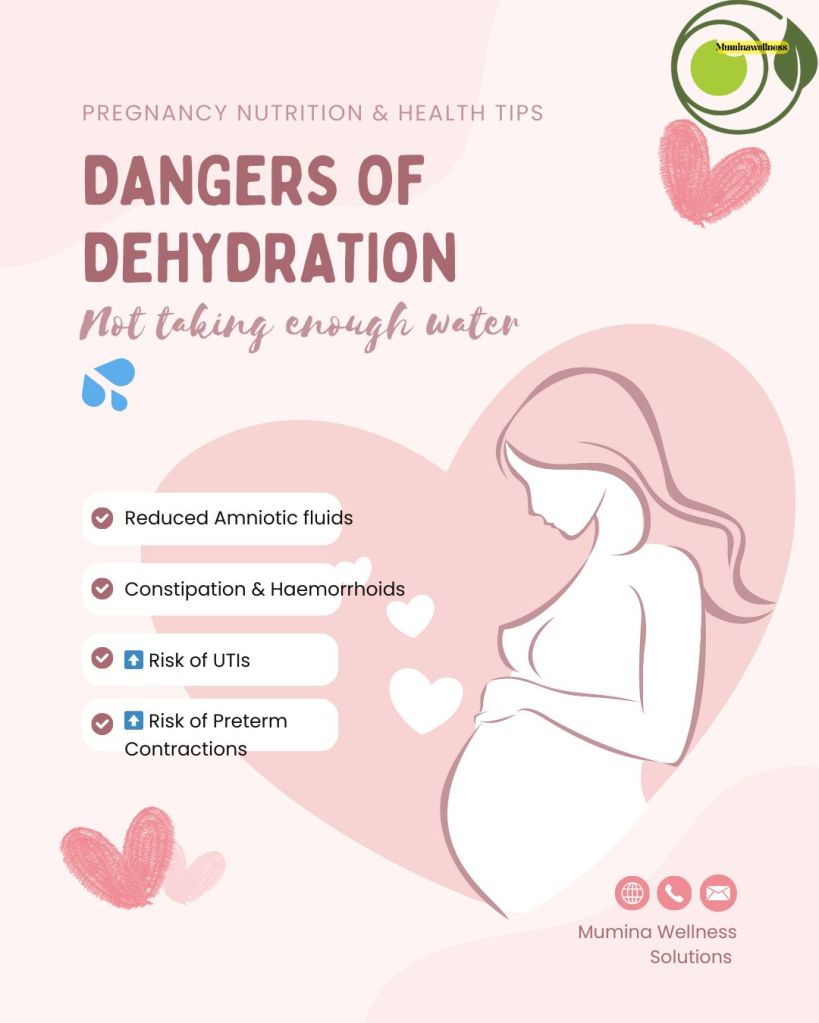
Dangers of Dehydration in Pregnancy
Even mild dehydration can have noticeable effects on pregnancy.
For the Mother
- Headaches and dizziness
- Constipation and hemorrhoids
- Fatigue and low energy
- Increased risk of urinary tract infections
- Reduced milk supply preparation postpartum
For the Pregnancy
- Reduced amniotic fluid levels
- Increased risk of preterm contractions
- Worsened nausea and Braxton Hicks contractions
- Poor circulation affecting nutrient delivery
Hydration is a preventive tool, not just a comfort measure.
How Much Water Should a Pregnant Woman Drink?
Most guidelines recommend:
💧 2.3 – 3 liters per day (about 8–12 cups), depending on:
- Body size
- Climate
- Activity level
- Stage of pregnancy
Needs may increase with:
- Hot weather
- Physical activity
- Vomiting or diarrhea
Signs You May Not Be Drinking Enough Water
Watch out for:
🚩 Dark yellow urine
🚩 Dry mouth or lips
🚩 Headaches
🚩 Fatigue
🚩 Dizziness
Your urine color is one of the simplest hydration indicators.
Practical Tips to Stay Hydrated During Pregnancy
✔ Sip water throughout the day instead of large amounts at once
✔ Add lemon, cucumber, or fruit slices for taste
✔ Include water-rich foods (fruits, vegetables, soups)
✔ Use reminders or a water bottle with measurements
✔ Balance fluids with electrolytes when advised by a professional
Hydration Is Not One-Size-Fits-All
Pregnancy hydration needs vary, especially for women managing:
- Severe nausea and vomiting
- Gestational diabetes
- Hypertension
- Multiple pregnancies
This is where personalised nutrition guidance matters.
Why Professional Guidance Makes a Difference
Many pregnancy complications are influenced by nutrition and hydration, yet most women receive only general advice.
As a Registered Dietitian and a mother who understands the realities of pregnancy, I work with expectant moms to:
- Personalise hydration and nutrition plans
- Manage pregnancy-related symptoms and complications
- Support healthier pregnancy, delivery, and postpartum recovery
A Gentle Invitation to Supported Care

If you’re pregnant and want:
✔ Evidence-based nutrition guidance
✔ Support beyond generic advice
✔ Personalised care that fits your real life
My Pregnancy Nutrition & Wellness Coaching Program begins 15th January 2026 and is limited to 20 moms to ensure quality, personalised support.
Pregnancy outcomes don’t happen by chance —
they are supported by intentional nutrition, hydration, and care.
Final Takeaway
Hydration during pregnancy is not optional.
It is foundational to maternal health, fetal development, and pregnancy outcomes.
Drink intentionally.
Listen to your body.
Seek guidance when unsure.
References;
- World Health Organization (WHO) – Nutrition in Pregnancy
- American College of Obstetricians and Gynecologists (ACOG)
- Institute of Medicine (IOM) – Dietary Reference Intakes for Water
- NHS Pregnancy Hydration Guidelines

 Nutrition, Diet and Health Tips
Leave a comment